
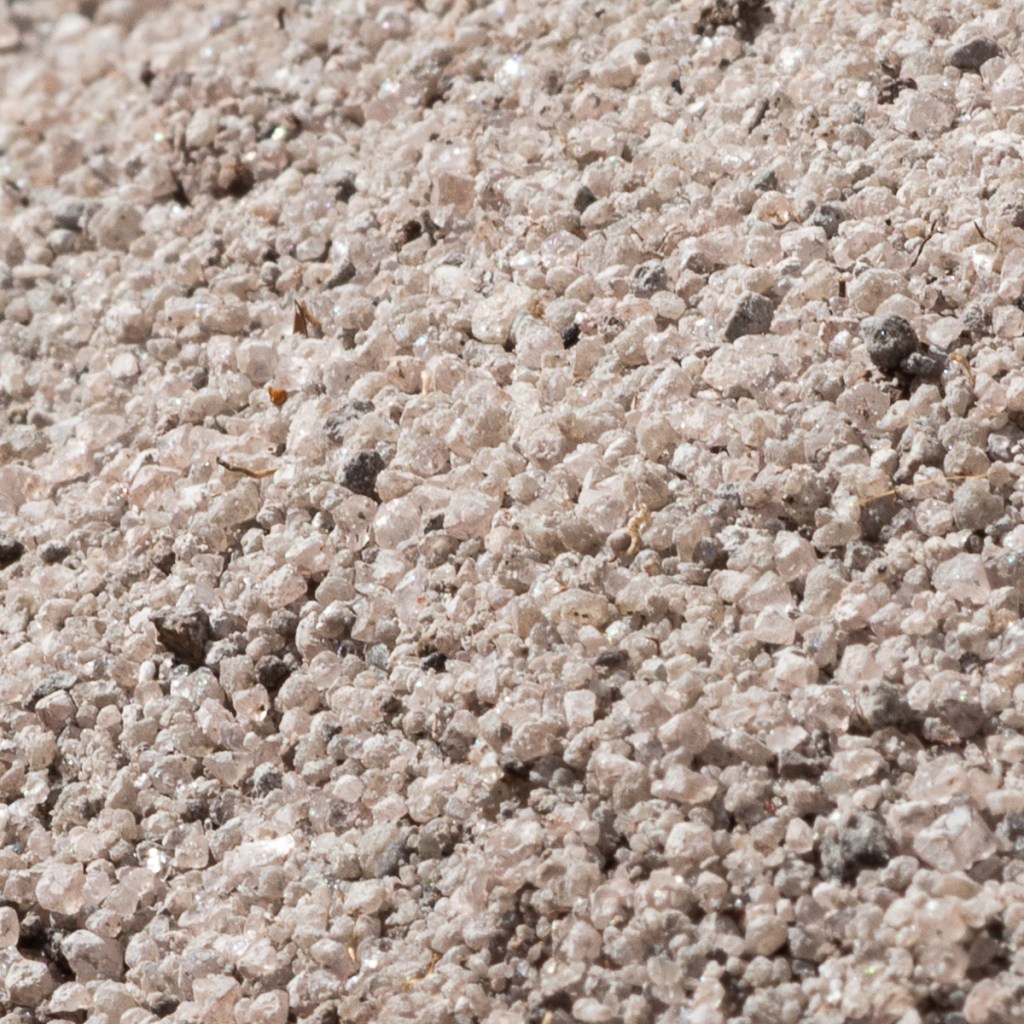
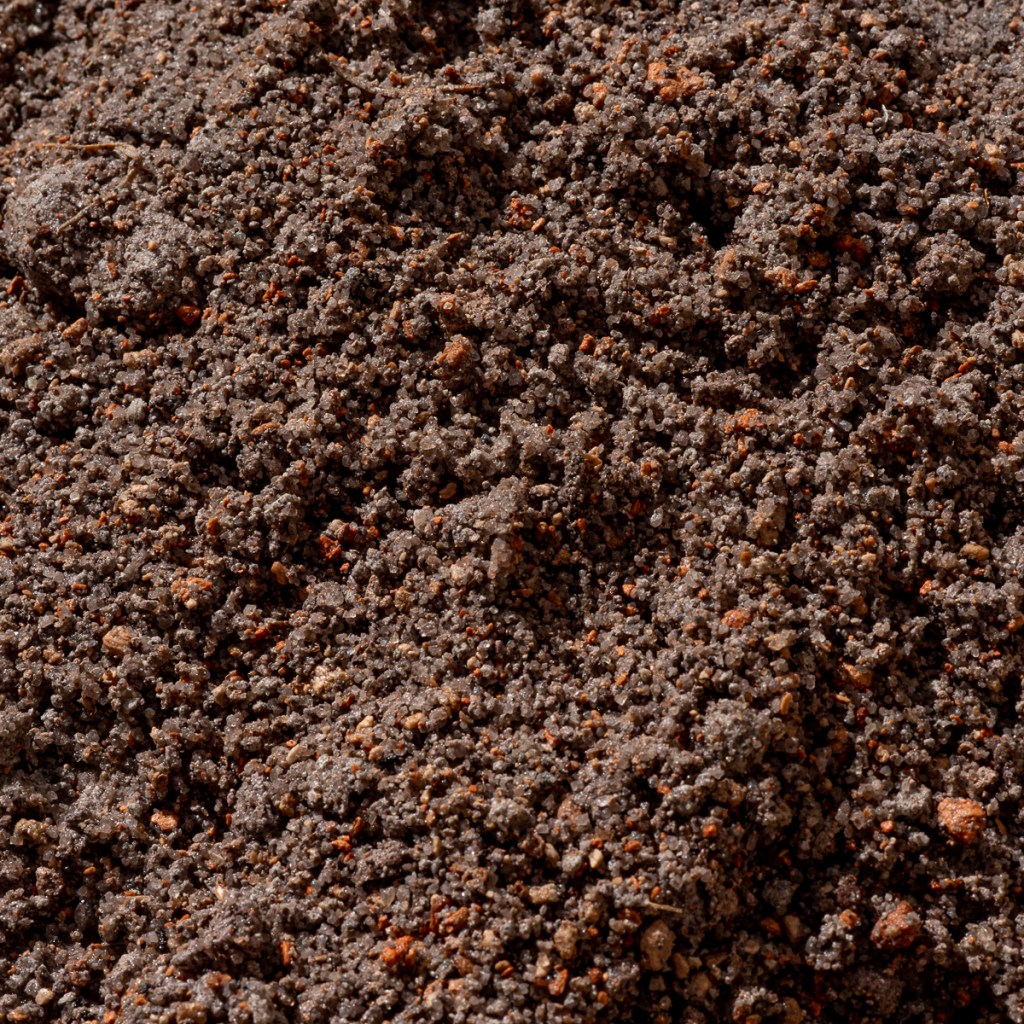
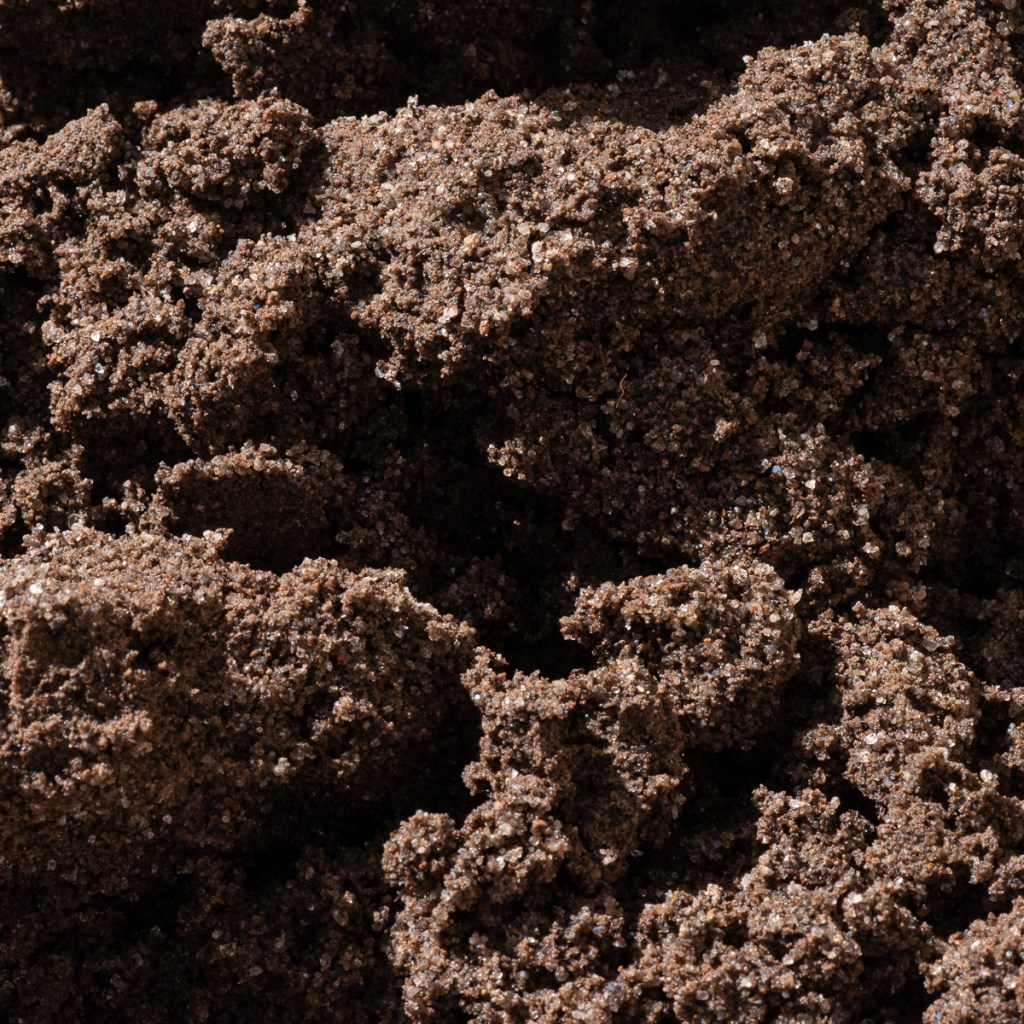


For this glaze, I collected three different tuffs from the mountains and mesas near my home. Each one will be processed down and tested to see if they work well as a glaze material. From the different colors of each one I assume they have varying compositions, which will create varying glazes, but that is not always the case. Number 1 could have a similar composition as number 3, but contains more organic material which would burn off in the kiln. Based on the off putting smell coming from that bucket, this could be the case. Alternatively it could be darker from impurities such as iron, which would be noticeably different in a glaze.
The first step is screening everything through 1/4” hardware cloth to get the big chunks out. I do all screening and sieving wet to keep hazardous airborne dust to a minimum. It is also best to do outside for the same reason.
Next the material is poured through a window screen, and lastly through a 40 mesh sieve. Many potters prefer a finer product, but for my needs 40 is sufficient. To get a finer particle size grinders and mills are used. Anything that doesn’t make it through the screens can be crushed down and screened again, or used elsewhere.
Chunks bigger than 1/4” are typically pumice. Pumice is porous and can help with water retention in soil, so these chunks go right into the garden. The smaller pieces that don’t make it through the window screen and sieve will be mixed into a clay body (photo 4).These pieces are too big to melt smoothly into a glaze, but can add a nice texture to a body. Most of the time required to process a raw material is typically waiting for it to settle.
The finest particles, which can take days or weeks to settle, are important for a good melt, so it’s best to be patient. Once settled, the clear water is poured off the top and the material is put into bisque ware and left to dry. If it still has moisture it will be difficult to accurately measure, leading to a lack of consistency. The dry powder is now ready to measure out and mix into a glaze. The last photo is of my first successful pumice/tuff glaze test from 2019, which is now the favorite dining bowl of our cat.
From January 27, 2024
 Site Title
Leave a comment